 VapeWholesaleHub
Setting Minimum Order Quantities for Mocha Ice — EU Markets
Buyers often ask us to explain why two mocha ice samples that look identical behave differently after a month. The answer is almost always tolerance control, and it is more interesting than it sounds.
The Specification That Matters
Pay attention to how a mocha ice supplier responds when you ask for a tolerance they do not want to commit to. The hesitation is usually more informative than the eventual answer.
Where possible, tie part of the mocha ice payment to inspection against the written spec. It focuses attention on the numbers rather than on the relationship.
| Product category | Accessory |
|---|---|
| Resistance band | 0.6 - 0.8 ohm |
| Capacity tolerance | +/- 5% |
| Puff count method | Machine cycle 3s on / 27s off |
| Master carton | 100 units |
| Carton weight | 11.5 kg |
| Shelf life | 24 months |
| Storage | 15-25 C, dry, away from direct light |
Quality Control in Practice
Incoming inspection for mocha ice is not about opening boxes at random. We weigh a sample of cartons, check batch codes against the production record, run a draw resistance measurement, and log the results so that a complaint three months later can be traced to a specific run.
Most defects in mocha ice are not dramatic. They are loose tolerances, a slightly thin seal, a mouthpiece that clicks. Left alone they turn into leak complaints, which are the single most common reason a retailer drops a line.
- Rotate stock by batch code rather than by delivery date.
- Keep sealed retained samples from every production batch.
- Ask how the factory measures puff count, then compare like with like.
- Confirm the current customs classification with your own broker.
- Write the complaint threshold into the order terms.
Turning Mocha Ice Into Repeats
Put mocha ice where the decision is made, not where the margin is highest. In most stores that means near the counter or at eye level in the category, rather than wherever there is spare space.
Modelling a Healthy Margin
Compare mocha ice quotes on the same incoterm. A price that looks better because it excludes a cost you assumed was included is not a saving at all.
Hold a small mocha ice buffer in your pricing model for currency movement. A few percent on a container is a real number, and it is easier to plan for than to absorb.
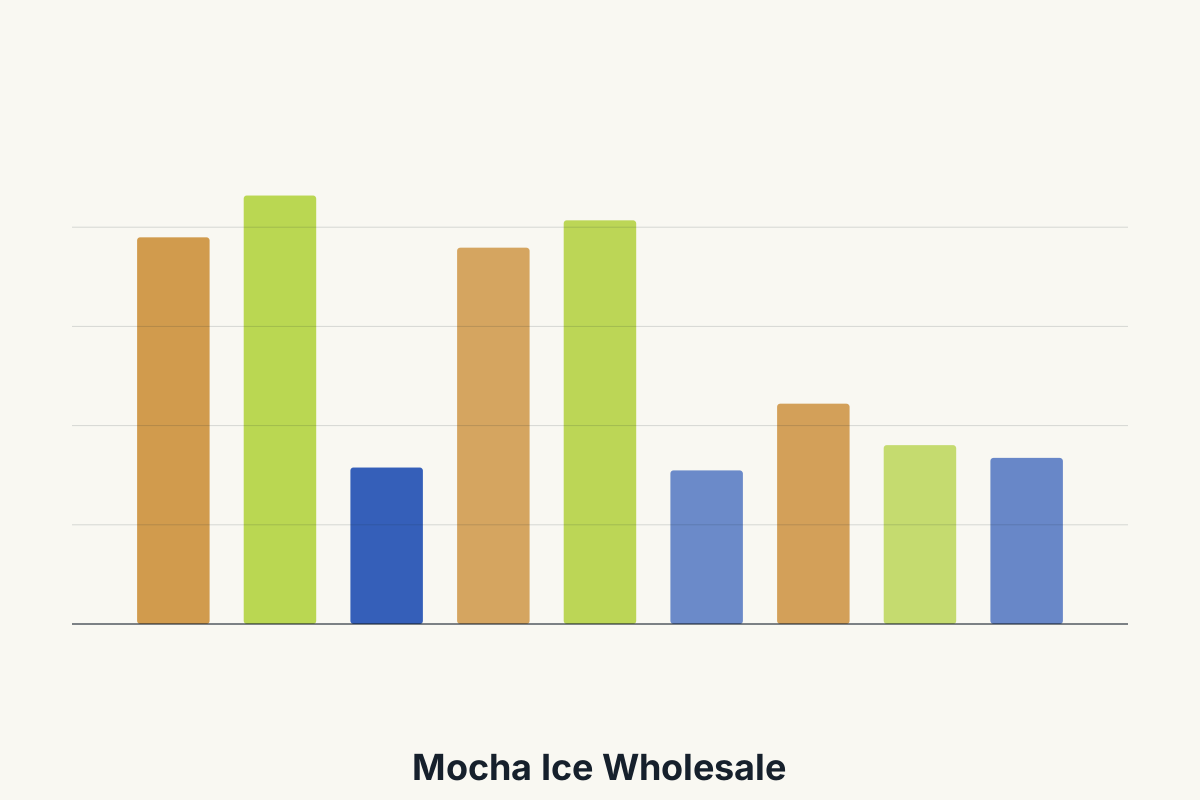
Indicative reference points for planning purposes: entry tier from USD 1.20 per unit at 2000 units, mid tier at USD 1.37, and volume tier at USD 0.81 for full container quantities. These figures move with specification, packaging and freight, so treat them as a shape rather than a quote.
Where Demand Is Heading
Flavour cycles in mocha ice are shortening, which argues for smaller test orders and faster feedback loops rather than large speculative buys on a predicted winner.
Expect mocha ice packaging requirements to keep tightening. Designs that leave room for additional labelling age better than tight layouts that need a full reprint to comply.
Logistics That Protect Margin
Plan the mocha ice customs paperwork at the same time as the order, not when the goods are on the water. A missing document costs more in demurrage than the entire freight saving from a cheap forwarder.
Carton dimensions for mocha ice are a design decision, not a packing afterthought. A few centimetres on the master carton can change how many units fit a pallet, and that repeats on every order.
Practical Checklist
- Ask how the factory measures puff count, then compare like with like.
- Check carton dimensions against your freight quote before confirming.
- Rotate stock by batch code rather than by delivery date.
- Confirm the current customs classification with your own broker.
- Agree the tolerance band in writing before approving artwork.
- Start with a mixed carton and let your own sell-through decide.
Frequently Asked Questions
What if I only need a small first order?
That is normal and sensible. A mixed carton lets you test mocha ice in your own market before committing to a production run, and the specification you approve at that stage carries through to larger orders unchanged.
How should mocha ice be stored?
Cool, dry and out of direct sunlight. Heat and light are the two things that shorten shelf life fastest. Rotate stock by batch code rather than by arrival date, and keep cartons off concrete floors in humid warehouses.
Can you match an existing product I already sell?
Often yes, provided we can measure it properly. Send a physical sample and we will report back on what can be matched, what will differ slightly, and why. An honest gap is more useful than a vague promise.
Do you hold stock for regular customers?
For established programmes we can reserve production slots and, in some cases, hold finished mocha ice stock against a forecast. It removes most of the lead time risk from a reorder and is worth discussing once volumes are stable.
Next Step
Start smaller than feels comfortable, measure honestly, then scale what worked. That sequence has saved more of our customers money than any negotiation tactic we could suggest.
Related Reading
- Mocha Ice Specification Change Control — Online Sellers
- Mocha Ice Handling, Labeling and Regulatory Paperwork — Mixed Cabinets
- Mocha Ice Regulatory Change Monitoring — Private Label Programmes
- Sustainability and Take Back Programmes for Mocha Ice — Cross-Border Trade
- Mocha Ice Packaging Refresh Without Losing Recognition — Three Price Tiers
- Pricing Mocha Ice for Healthy Retail Margins — Established Chains