 VapeWholesaleHub
Mocha Ice Sample Approval Meeting Agenda — Container-Scale Orders
A mocha ice programme fails in predictable ways: a specification nobody wrote down, a sample nobody retained, and a lead time nobody stress tested. Here is how to close those three gaps before they cost you a container.
Getting Mocha Ice to Your Warehouse
Consolidating mocha ice with other lines is often the biggest single saving available to a mid size importer. The unit cost does not change but the landed cost does, sometimes materially.
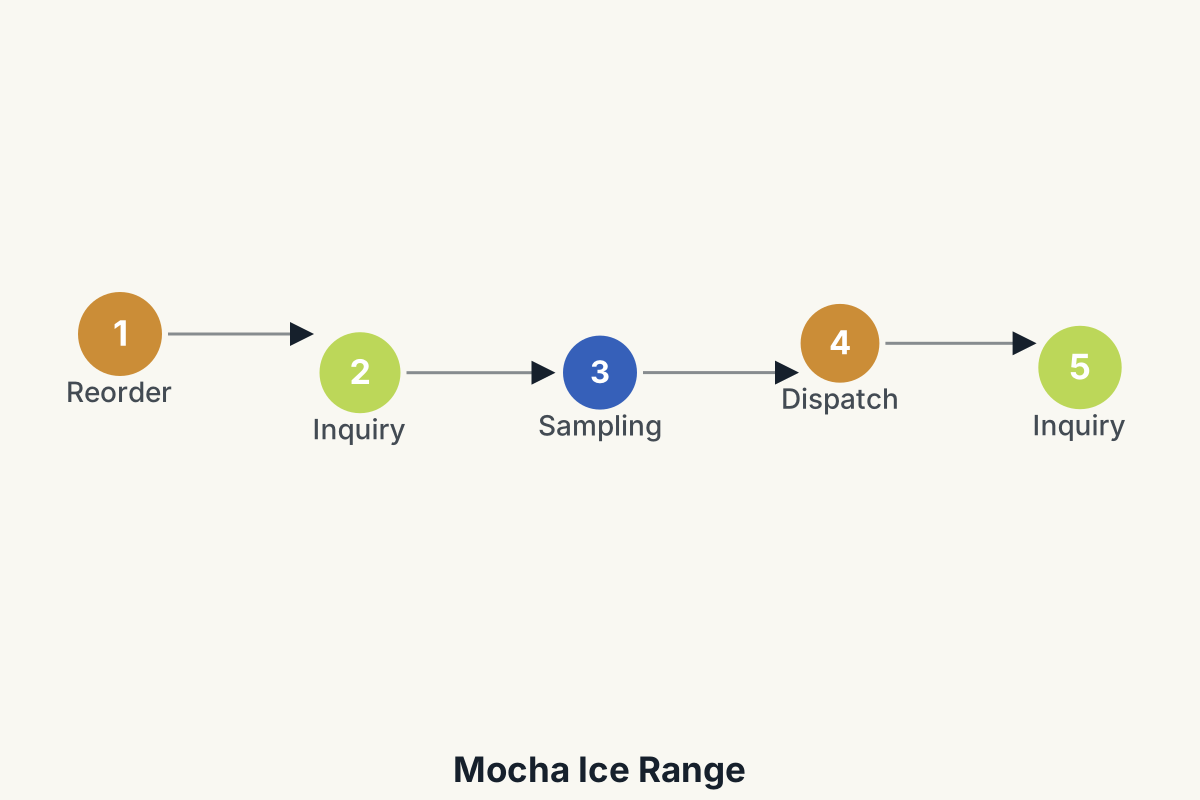
Positioning Mocha Ice on Your Shelf
Range decisions for mocha ice should start from shelf space, not from a supplier catalogue. Count the facings you actually have, then decide how many of them this line deserves against what it currently earns.
Mocha Ice sits at an interesting point in the assortment. It is familiar enough to be an impulse purchase and specific enough to build a repeat pattern around. Treating it as either pure commodity or pure specialty both lead to poor results.
Modelling a Healthy Margin
When you model mocha ice pricing, build in a realistic shrink figure. Even a well run line loses a small percentage to damage, expiry and sampling. Pretending that number is zero is how a healthy looking margin turns negative.
Tiered pricing works best when the tiers match real customer behaviour. Most mocha ice buyers will take the second tier if the step is modest and the third tier only if they can see a genuine reason to hold more stock.
Indicative reference points for planning purposes: entry tier from USD 1.45 per unit at 1000 units, mid tier at USD 0.80, and volume tier at USD 1.23 for full container quantities. These figures move with specification, packaging and freight, so treat them as a shape rather than a quote.
Reading a Mocha Ice Spec Sheet
Revisit the mocha ice specification after every third order. Small improvements compound, and factories take a buyer more seriously when the document has clearly been used.
Specification sheets are where a mocha ice deal is won or quietly lost. Two samples can look and taste the same while using different coil wire, different wicking density and different tolerances on the mouthpiece. Those details decide how the unit behaves in week three rather than minute three.
| Product category | Open system |
|---|---|
| Resistance band | 1.2 - 1.4 ohm |
| Capacity tolerance | +/- 2% |
| Puff count method | Declared by capacity |
| Master carton | 100 units |
| Carton weight | 10.8 kg |
| Shelf life | 12 months |
| Storage | 15-25 C, dry, away from direct light |
Merchandising and Listing Tips
Use your mocha ice staff training time on the two questions customers actually ask. Anything more detailed gets forgotten by the second shift.
Market Signals
Demand for mocha ice has been steadily rebalancing. The early phase rewarded whoever could ship fastest; the current phase rewards whoever can ship the same thing twice. That shift favours buyers who invest in specification rather than price shopping.
Traceability is moving from a nice-to-have to a requirement in several mocha ice markets. Building the habit now is cheaper than retrofitting record keeping under pressure later.
Practical Checklist
- Confirm the current customs classification with your own broker.
- Agree the tolerance band in writing before approving artwork.
- Ask how the factory measures puff count, then compare like with like.
- Keep sealed retained samples from every production batch.
- Rotate stock by batch code rather than by delivery date.
- Check carton dimensions against your freight quote before confirming.
Frequently Asked Questions
Can I mix strengths in one order?
In most cases yes, as long as each strength meets the minimum run length. Mixed strength cartons are popular with retailers building their first display because they show the full ladder without over committing.
Can you match an existing product I already sell?
Often yes, provided we can measure it properly. Send a physical sample and we will report back on what can be matched, what will differ slightly, and why. An honest gap is more useful than a vague promise.
What if a batch does not match the sample?
Keep the retained samples from the approval stage. If a delivered batch measurably differs, we compare against the retained set and resolve it against the production record. This is why we insist on sealed retained units from every run.
What information do you need to quote?
Target specification, approximate quantity, destination and any packaging requirement. With those four we can usually come back with a costed option the same working day rather than a request for more information.
Next Step
Nobody wins when a first order is too large to learn from. Start with a mixed carton, check how it moves in your own market, then scale the lines that earned the shelf space.
Related Reading
- Mocha Ice Product Listings That Actually Convert — Regional Distributors
- Mocha Ice First Order Playbook for New Importers — EU Markets
- Warehouse Layout Tips for Mocha Ice Distributors — a Factory Floor View
- Mocha Ice Handling Product Recalls Professionally — Southeast Asia
- Mocha Ice Contract Clauses Worth Negotiating — Convenience Retail
- Private Label Mocha Ice: Steps From Idea to Carton — a Printable Checklist