 VapeWholesaleHub
Mocha Ice Market Demand: Reading the Numbers — Landed Cost Worked Through
We ship mocha ice to distributors in very different markets, and the same five questions come up almost every week. Rather than answer them in email each time, we have written them out properly here.
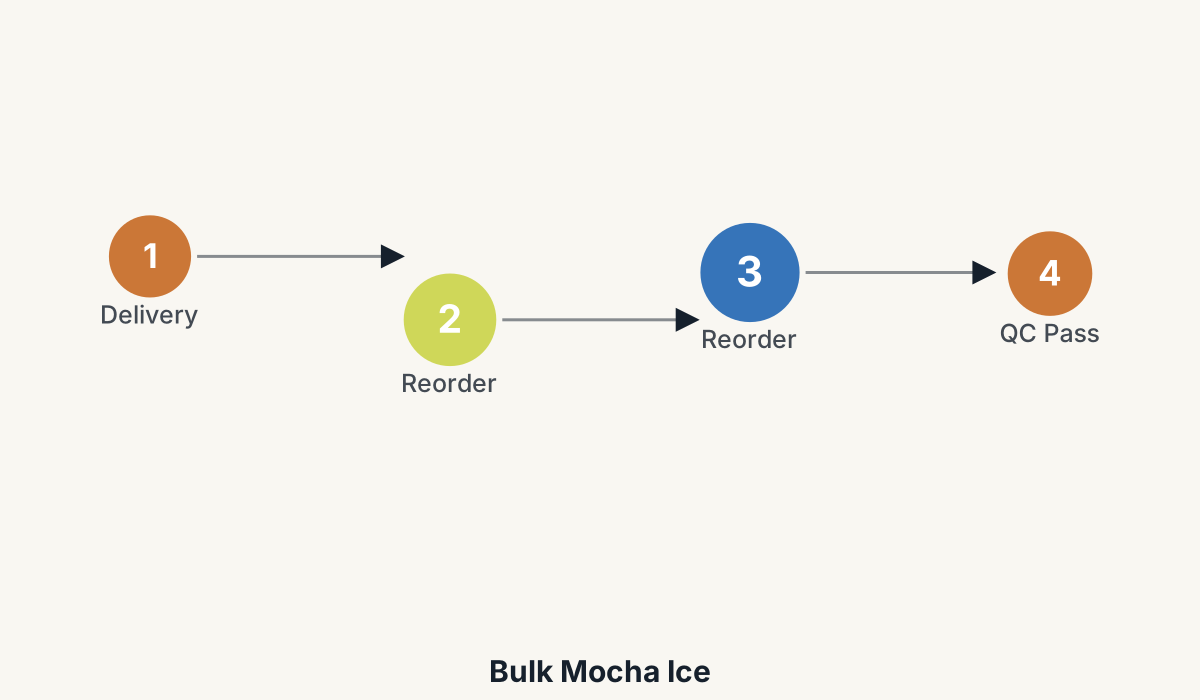
What Mocha Ice Really Costs Landed
Tiered pricing works best when the tiers match real customer behaviour. Most mocha ice buyers will take the second tier if the step is modest and the third tier only if they can see a genuine reason to hold more stock.
Margin on mocha ice is rarely lost at the till. It is lost through dead stock, returns and emergency air freight. A slightly higher landed cost with predictable lead time usually beats the cheapest quote on the spreadsheet.
Indicative reference points for planning purposes: entry tier from USD 0.86 per unit at 1000 units, mid tier at USD 1.61, and volume tier at USD 1.05 for full container quantities. These figures move with specification, packaging and freight, so treat them as a shape rather than a quote.
What to Fix Before Approving Mocha Ice
Revisit the mocha ice specification after every third order. Small improvements compound, and factories take a buyer more seriously when the document has clearly been used.
| Product category | Pod system |
|---|---|
| Resistance band | 0.8 - 1.0 ohm |
| Capacity tolerance | +/- 3% |
| Puff count method | Machine cycle 2s on / 18s off |
| Master carton | 400 units |
| Carton weight | 7.0 kg |
| Shelf life | 18 months |
| Storage | 15-25 C, dry, away from direct light |
Logistics That Protect Margin
Freight is the hidden half of mocha ice unit economics. A denser master carton can save more per unit than a hard negotiation on factory price, because the saving repeats on every reorder rather than once.
Track mocha ice landed cost per unit as a running number, including duty and local delivery. It is the only figure that tells you whether a supplier change actually improved anything.
Where Mocha Ice Sits in the Range
One useful exercise: list every mocha ice line you stock and mark the last date each one sold at full price. Anything without a recent full price sale is taking space from something that would use it better.
Category data for mocha ice is noisier than it looks. Promotions, weather and local competition all move weekly numbers, so read three months at a time rather than reacting to a single week.
Quality Control in Practice
Incoming inspection for mocha ice is not about opening boxes at random. We weigh a sample of cartons, check batch codes against the production record, run a draw resistance measurement, and log the results so that a complaint three months later can be traced to a specific run.
Most defects in mocha ice are not dramatic. They are loose tolerances, a slightly thin seal, a mouthpiece that clicks. Left alone they turn into leak complaints, which are the single most common reason a retailer drops a line.
- Plan the switch from air to sea freight before you need it.
- Rotate stock by batch code rather than by delivery date.
- Confirm the current customs classification with your own broker.
- Keep sealed retained samples from every production batch.
- Write the complaint threshold into the order terms.
Trends Worth Watching
Assortment rationalisation is the quiet trend in this category. Shops that cut their mocha ice range from twelve lines to five well chosen ones often report higher total sales, not lower.
Flavour cycles in mocha ice are shortening, which argues for smaller test orders and faster feedback loops rather than large speculative buys on a predicted winner.
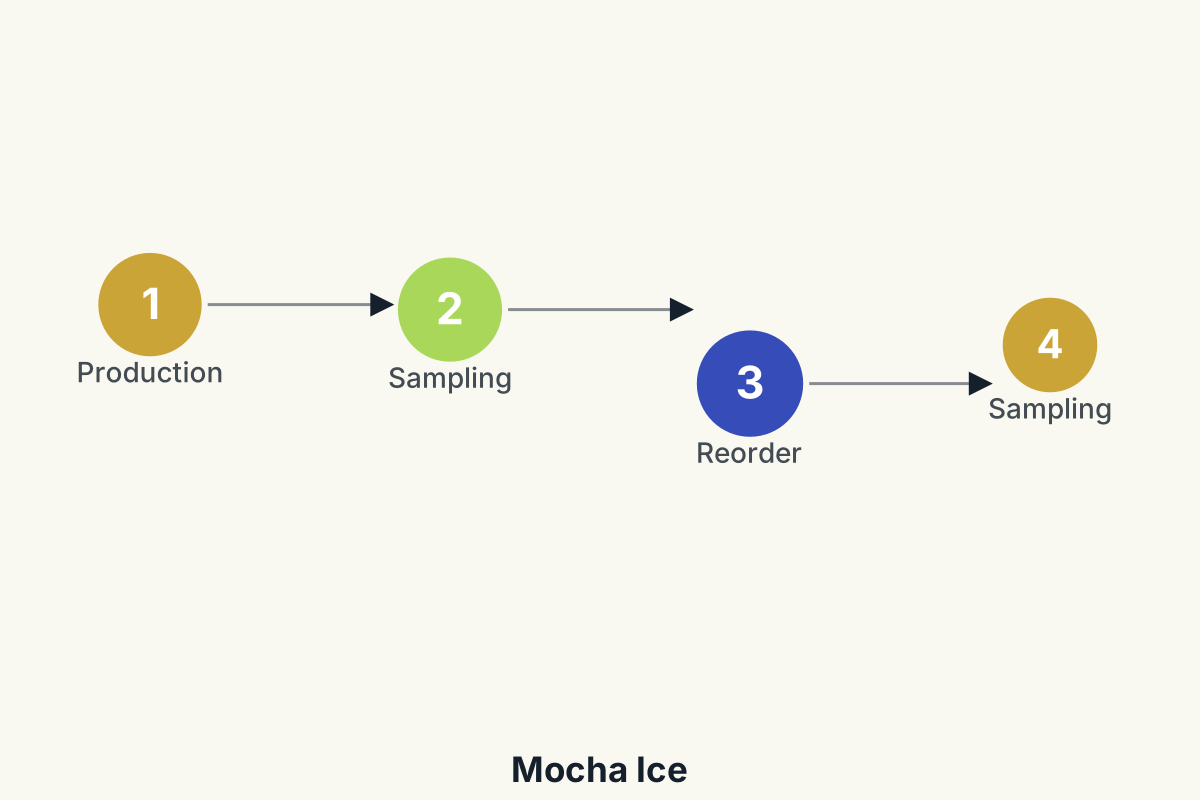
Practical Checklist
- Rotate stock by batch code rather than by delivery date.
- Plan the switch from air to sea freight before you need it.
- Agree the tolerance band in writing before approving artwork.
- Confirm the current customs classification with your own broker.
- Check carton dimensions against your freight quote before confirming.
- Write the complaint threshold into the order terms.
Frequently Asked Questions
What if a batch does not match the sample?
Keep the retained samples from the approval stage. If a delivered batch measurably differs, we compare against the retained set and resolve it against the production record. This is why we insist on sealed retained units from every run.
Can you match an existing product I already sell?
Often yes, provided we can measure it properly. Send a physical sample and we will report back on what can be matched, what will differ slightly, and why. An honest gap is more useful than a vague promise.
What if I only need a small first order?
That is normal and sensible. A mixed carton lets you test mocha ice in your own market before committing to a production run, and the specification you approve at that stage carries through to larger orders unchanged.
Can I mix strengths in one order?
In most cases yes, as long as each strength meets the minimum run length. Mixed strength cartons are popular with retailers building their first display because they show the full ladder without over committing.
Next Step
Start smaller than feels comfortable, measure honestly, then scale what worked. That sequence has saved more of our customers money than any negotiation tactic we could suggest.
Related Reading
- Mocha Ice Print Methods for Cartons and Labels — a Factory Floor View
- Common Mocha Ice Mistakes New Distributors Make — a Factory Floor View
- How to Read a Mocha Ice Certificate of Analysis — Busy Buyers
- Mocha Ice Warehouse Picking and Batch Rotation — Oceania
- Mocha Ice Insurance and Cargo Cover Explained — a Printable Checklist
- Mocha Ice When to Add a Second Factory — Retail Chains