 VapeWholesaleHub
Mocha Ice Dual Sourcing Without Losing Consistency — the Buying Desk
Everything below applies whether you are ordering one mixed carton or a full container. The numbers scale, but the logic does not change, which is the point of writing it down once.
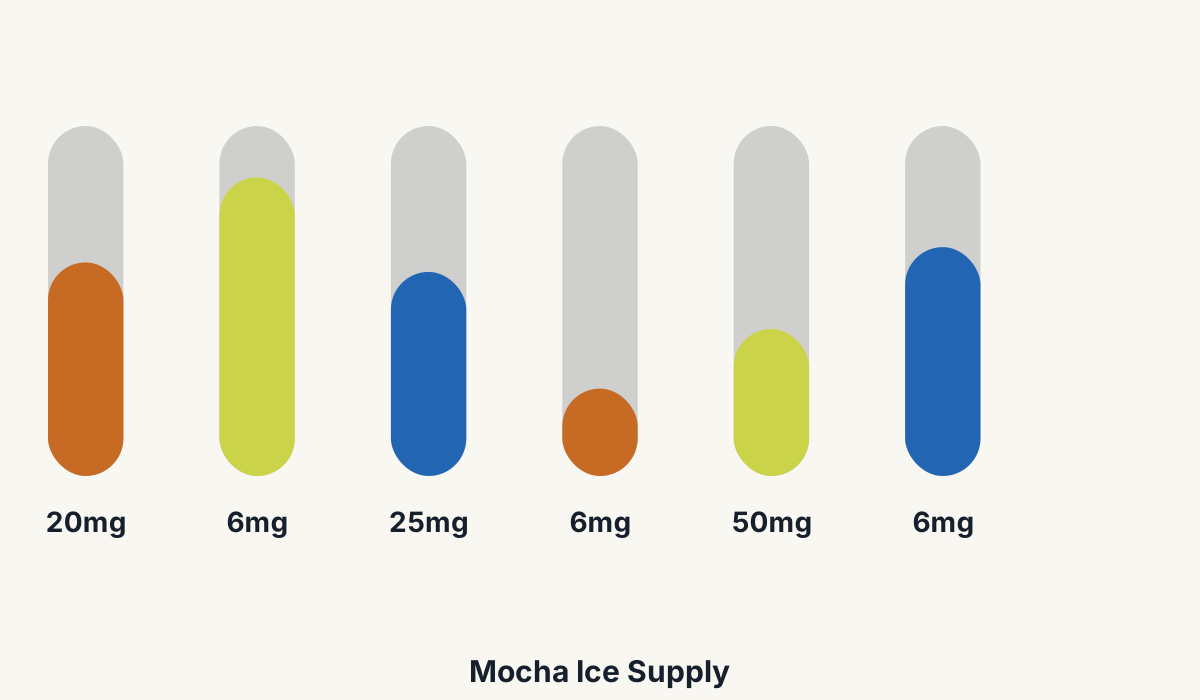
Turning Mocha Ice Into Repeats
On shelf, mocha ice sells on clarity. A plain shelf talker that states strength and flavour in two words outperforms a beautifully designed but vague display, because most purchase decisions here take under ten seconds.
Online, the listing for mocha ice should answer three questions without scrolling: what it is, how strong it is, and what it tastes like. Everything else belongs further down the page.
Positioning Mocha Ice on Your Shelf
Before anything else, decide which customer you are buying mocha ice for. A convenience counter with limited shelf depth needs a tight range that turns quickly, while a specialist shop can carry a deeper ladder of options and educate buyers into higher ticket lines.
Range decisions for mocha ice should start from shelf space, not from a supplier catalogue. Count the facings you actually have, then decide how many of them this line deserves against what it currently earns.
The Specification That Matters
When we write a mocha ice specification with a distributor, we fix four things first: the resistance band, the liquid capacity tolerance, the puff count methodology and the packaging master carton. Everything else can flex without changing the customer experience.
| Product category | Closed pod |
|---|---|
| Resistance band | 0.8 - 1.0 ohm |
| Capacity tolerance | +/- 5% |
| Puff count method | Declared by capacity |
| Master carton | 100 units |
| Carton weight | 9.8 kg |
| Shelf life | 18 months |
| Storage | 15-25 C, dry, away from direct light |
What Mocha Ice Really Costs Landed
Tiered pricing works best when the tiers match real customer behaviour. Most mocha ice buyers will take the second tier if the step is modest and the third tier only if they can see a genuine reason to hold more stock.
Indicative reference points for planning purposes: entry tier from USD 1.64 per unit at 500 units, mid tier at USD 1.15, and volume tier at USD 1.39 for full container quantities. These figures move with specification, packaging and freight, so treat them as a shape rather than a quote.
Where Demand Is Heading
One visible change in mocha ice is the move towards clearer labelling and traceability. Retailers who adopted batch coding early are finding it much easier to work with larger distributors now.
One visible change in mocha ice is the move towards clearer labelling and traceability. Retailers who adopted batch coding early are finding it much easier to work with larger distributors now.
Practical Checklist
- Agree the tolerance band in writing before approving artwork.
- Write the complaint threshold into the order terms.
- Keep sealed retained samples from every production batch.
- Ask how the factory measures puff count, then compare like with like.
- Rotate stock by batch code rather than by delivery date.
- Confirm the current customs classification with your own broker.
Frequently Asked Questions
Can I visit the production facility?
Yes, and we encourage it for larger programmes. Visits are most useful when you already have a draft specification, because you can then check the specific processes behind the numbers you care about.
Do you provide compliance documents?
Every shipment leaves with the documentation set relevant to your market, including batch records and test reports where required. Your local rules still determine what you must file, so confirm those with your broker before import.
How do you handle a short shipment?
Cartons are counted and weighed before dispatch and the figures are shared with you. If something is short on arrival, the packing record and the carrier documentation are both available, which keeps the claim straightforward.
Can I mix strengths in one order?
In most cases yes, as long as each strength meets the minimum run length. Mixed strength cartons are popular with retailers building their first display because they show the full ladder without over committing.
How are price changes handled on repeat orders?
{K} pricing is reviewed against input costs and volume rather than adjusted casually. Any change is confirmed in writing before the next order is scheduled, with the reason stated so you can judge it yourself.
Next Step
Nobody wins when a first order is too large to learn from. Start with a mixed carton, check how it moves in your own market, then scale the lines that earned the shelf space.
Related Reading
- Building a Mocha Ice Catalogue Your Sales Team Can Use — North America
- Mocha Ice Compliance Basics for Importers — Freight Included
- Mocha Ice Insurance Valuation for Held Stock — the Middle East
- Mocha Ice Warranty and After Sales: Setting Expectations — New Distributors
- Mocha Ice Electronic Data Interchange for Large Accounts — Private Label Programmes
- Mocha Ice Communication Cadence With Overseas Suppliers — Landed Cost Worked Through