 VapeWholesaleHub
Mocha Ice Customer Feedback Loops That Improve Reorders — Repeat Orders
Retailers rarely lose money on mocha ice because of price. They lose money because the first container was bought on a photograph. This page walks through what actually matters when you source mocha ice at scale, written from the buying desk rather than the marketing department.
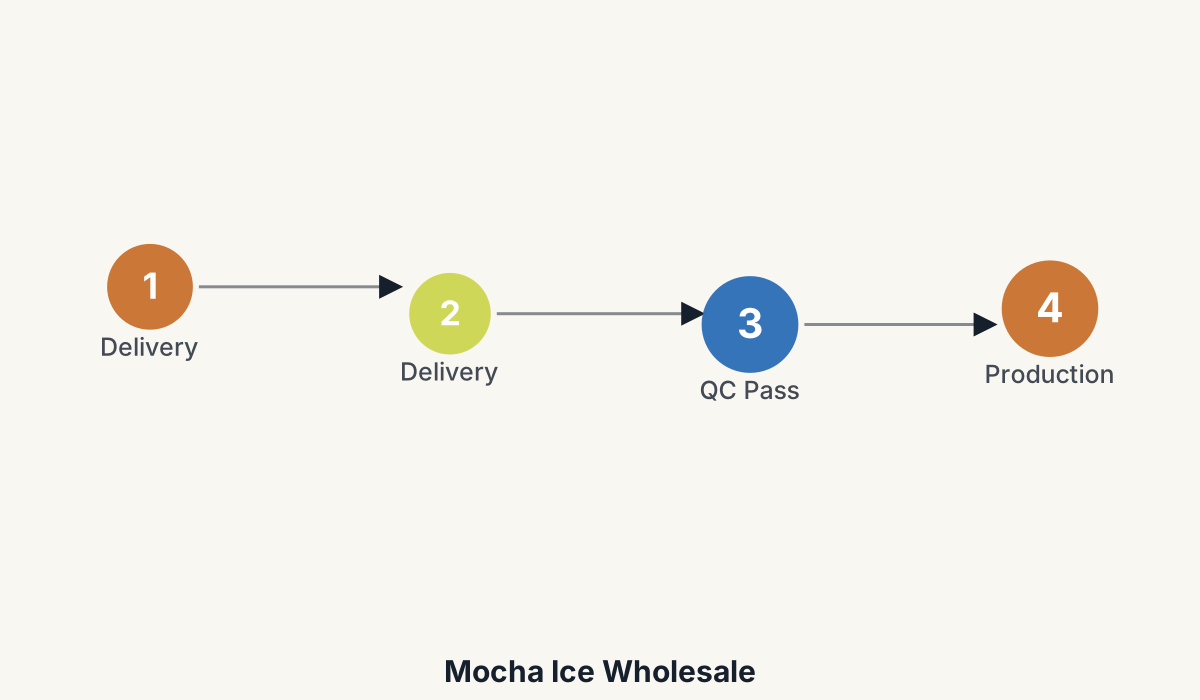
Freight, Customs and Timing
Air freight makes sense for a first mocha ice order when you need to test demand quickly, but almost every steady programme moves to sea freight once volumes stabilise. Planning that switch early avoids a painful margin squeeze later.
Track mocha ice landed cost per unit as a running number, including duty and local delivery. It is the only figure that tells you whether a supplier change actually improved anything.
How Mocha Ice Batches Are Checked
AQL sampling gets a lot of attention, but for mocha ice the more useful habit is simply measuring the same three things on every single batch. Trend lines catch problems that pass/fail checks miss.
- Check carton dimensions against your freight quote before confirming.
- Start with a mixed carton and let your own sell-through decide.
- Confirm the current customs classification with your own broker.
- Plan the switch from air to sea freight before you need it.
- Agree the tolerance band in writing before approving artwork.
Modelling a Healthy Margin
Tiered pricing works best when the tiers match real customer behaviour. Most mocha ice buyers will take the second tier if the step is modest and the third tier only if they can see a genuine reason to hold more stock.
Compare mocha ice quotes on the same incoterm. A price that looks better because it excludes a cost you assumed was included is not a saving at all.
Indicative reference points for planning purposes: entry tier from USD 1.55 per unit at 2000 units, mid tier at USD 1.10, and volume tier at USD 1.16 for full container quantities. These figures move with specification, packaging and freight, so treat them as a shape rather than a quote.
Where Demand Is Heading
Flavour cycles in mocha ice are shortening, which argues for smaller test orders and faster feedback loops rather than large speculative buys on a predicted winner.
One shift worth planning for: shorter mocha ice reorder cycles with smaller average drops. It favours suppliers with flexible production slots over those who only want large annual commitments.
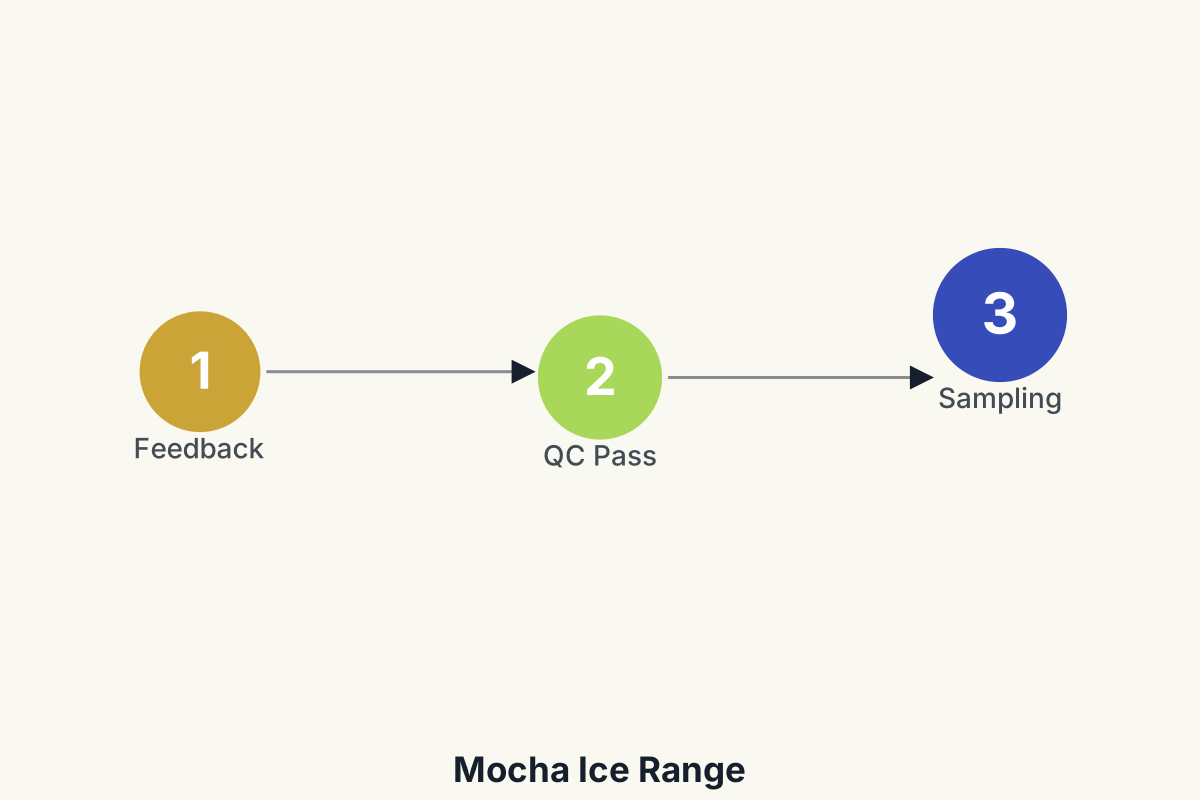
The Specification That Matters
A written mocha ice specification should be short enough to read in a minute and precise enough to argue about. If a factory cannot confirm a number in writing, assume the number is whatever is cheapest that week.
When we write a mocha ice specification with a distributor, we fix four things first: the resistance band, the liquid capacity tolerance, the puff count methodology and the packaging master carton. Everything else can flex without changing the customer experience.
| Product category | Pod system |
|---|---|
| Resistance band | 1.0 - 1.2 ohm |
| Capacity tolerance | +/- 3% |
| Puff count method | Declared by capacity |
| Master carton | 200 units |
| Carton weight | 4.9 kg |
| Shelf life | 12 months |
| Storage | 15-25 C, dry, away from direct light |
Positioning Mocha Ice on Your Shelf
Category planning for mocha ice works best when you map it against three shopper types: the restocker who already knows what they want, the switcher who wants something stronger, and the explorer who buys on flavour name alone.
Category data for mocha ice is noisier than it looks. Promotions, weather and local competition all move weekly numbers, so read three months at a time rather than reacting to a single week.
Practical Checklist
- Model landed cost, not ex-works price, when comparing quotes.
- Keep sealed retained samples from every production batch.
- Confirm the current customs classification with your own broker.
- Write the complaint threshold into the order terms.
- Agree the tolerance band in writing before approving artwork.
- Check carton dimensions against your freight quote before confirming.
Frequently Asked Questions
How are price changes handled on repeat orders?
{K} pricing is reviewed against input costs and volume rather than adjusted casually. Any change is confirmed in writing before the next order is scheduled, with the reason stated so you can judge it yourself.
Is there support for in-store material?
Yes. Shelf talkers, counter cards and simple planogram suggestions are available for mocha ice ranges that reach a sensible volume. Most retailers find the plain strength and flavour cards do the most work.
Can you match an existing product I already sell?
Often yes, provided we can measure it properly. Send a physical sample and we will report back on what can be matched, what will differ slightly, and why. An honest gap is more useful than a vague promise.
What if I only need a small first order?
That is normal and sensible. A mixed carton lets you test mocha ice in your own market before committing to a production run, and the specification you approve at that stage carries through to larger orders unchanged.
Can I visit the production facility?
Yes, and we encourage it for larger programmes. Visits are most useful when you already have a draft specification, because you can then check the specific processes behind the numbers you care about.
Next Step
If you are comparing options right now, send us the specification you have been quoted elsewhere. A side by side reading usually shows where the price difference actually comes from, and that is the most useful first conversation to have.
Related Reading
- Mocha Ice Payment Terms and Risk Management — Retail Chains
- Mocha Ice Approval Workflow From Sample to Shipment — New Distributors
- Mocha Ice Pallet Configuration for Mixed Orders — UK and Ireland
- Mocha Ice Warranty Claims Workflow — Plain Language
- Mocha Ice Copy That Answers Buyer Objections — High Volume Buyers
- How to Choose Mocha Ice Without Overpaying — 2026 Edition